
Mistfall Hunter Classes Guide: Roles, Weapons & Abilities
Compare all six Mistfall Hunter classes, their weapons, combat roles, signature mechanics, ability systems, and the verified class-change process.
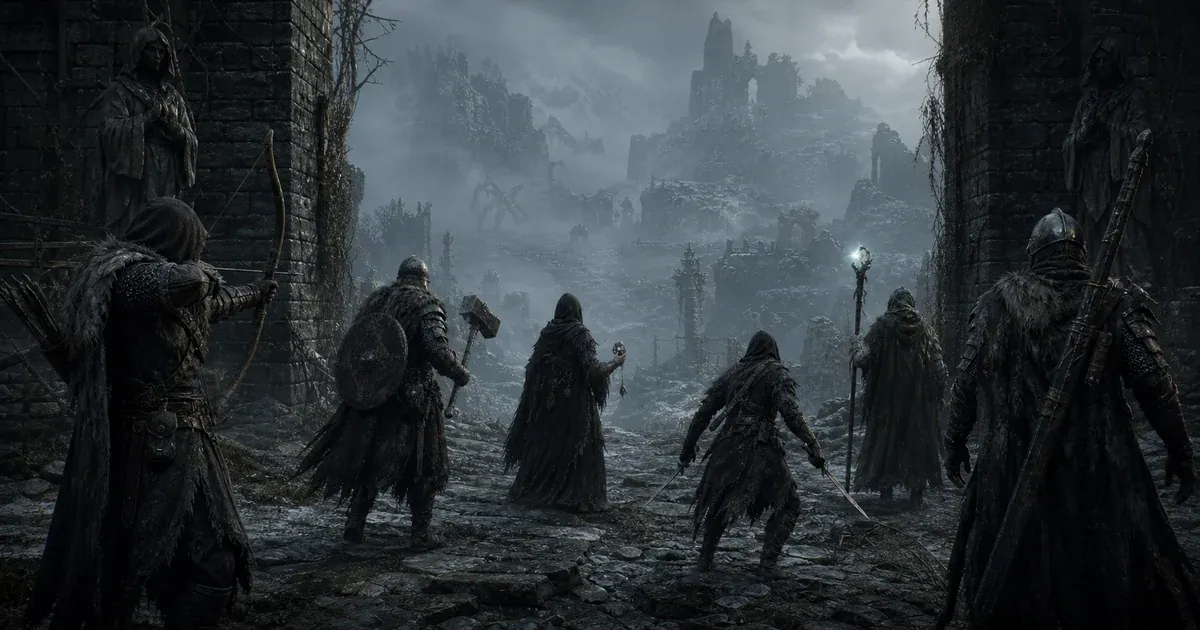
Mistfall Hunter currently has six playable classes: Blackarrow, Mercenary, Seer, Shadowstrix, Sorcerer, and Withered Knight. Each class has a distinct weapon or spell framework, unlockable skills, and talent choices. This guide explains those differences without turning community preferences into a universal ranking.
How many classes are in Mistfall Hunter?
All four sources reviewed for this guide identify the same six-class roster. Most classes change their active moveset by changing weapons; Sorcerer instead builds a spell loadout from magic schools. The table focuses on stable identity and directs full loadout questions to the relevant build guide.
| Class | Weapons or framework | Verified role and defining mechanic | Detailed build |
|---|---|---|---|
| Blackarrow | Bow; Mobalytics also lists Javelin as a later option | Ranged pressure built around charged shots, specialty arrows, positioning, and escape tools | Blackarrow build |
| Mercenary | Hammer or Sword and Shield | Flexible frontline fighter: Hammer emphasizes engage, area pressure, and stagger; Sword and Shield adds active defense and counterplay | Mercenary build |
| Seer | Catalyst or Mace | Catalyst supports a group with healing, shielding, runes, and control; the Mace path becomes the aggressive Blasphemer archetype | Seer build and Blasphemer build |
| Shadowstrix | Dagger or Dual Blades | Mobile rogue whose weapon sets cover stealth, flanking, poison, disruption, and sustained melee pressure | Shadowstrix build |
| Sorcerer | Staff and selectable magic schools | Ranged spellcaster that combines general utility with either faster elemental magic or slower, heavier Stardust casting | Sorcerer build |
| Withered Knight | Greatsword or Polearm and Shield | Greatsword supports offensive counters and displacement; Polearm and Shield protects space and allies through blocking and control | Withered Knight build |
How do class abilities and talents work?
Skills and talents can be changed between expeditions at no cost, according to Legacy Gaming’s hands-on guide. Your selected weapon or magic path determines the core actions available during a run, while the loadout and talent systems let you tune that framework before entering the hunting ground.
The sources use several related terms:
| Term | What it means in practice |
|---|---|
| Weapon moveset | Core attacks and weapon-specific actions that change when a class swaps weapon branches |
| Skills | Active attacks, movement, defense, control, or support actions selected for the expedition |
| Talents | Passive or conditional modifiers unlocked while leveling and selected between runs |
| Specialty arrows | Blackarrow effects that modify a following shot, separate from conventional weapon skills |
| Magic schools | Sorcerer’s spell groups; general utility remains available while the class chooses an offensive school |
| Breakaway | A shared class mechanic that can escape stagger after repeated impact damage; it has an internal cooldown |
This is not a complete ability database. The August class sources agree on each archetype but do not provide a versioned, official list of every skill, talent, numerical coefficient, or cooldown. The individual build pages therefore cover only choices supported by their own collected evidence.
What makes each class play differently?
The largest difference is not simply melee versus ranged. It is how each class creates a safe opening and what it contributes after that opening appears.
How does Blackarrow control a fight?
Blackarrow starts engagements from range and uses charged shots, special arrow effects, and repositioning to keep that distance. One beginner video recommends the class because range gives a new player more room to learn, while other guides stress that its advantage shrinks when experienced opponents close the gap.
How do Mercenary and Withered Knight differ?
Both can occupy the frontline, but their sources frame them differently. Mercenary is the more straightforward all-rounder, moving between Hammer pressure and Sword-and-Shield safety. Withered Knight has a more specialized split between aggressive Greatsword counterplay and a Polearm-and-Shield protector that controls space for allies.
Is Seer only a healer?
No. The Catalyst side supports allies with healing, shields, runes, and control, but the Mace route renounces that supportive oath for the Blasphemer style. Mobalytics explicitly notes that the two sides are a choice rather than simultaneous access; use the separate build pages instead of trying to combine both identities.
How do Shadowstrix and Sorcerer create pressure?
Shadowstrix relies on movement, stealth, weapon switching, and melee disruption to manufacture a favorable duel. Sorcerer manages energy and spell selection at range: basic attacks restore energy, while charged attacks and spells spend it. Legacy Gaming distinguishes faster elemental casting from slower, higher-output Stardust magic.
Can you change class after starting?
Yes. Two independent sources describe changing class through Dew after the tutorial and the following quest. The change preserves the character’s level, but it requires a Gyldenblod fee, asks you to leave valuable carried items in storage, and starts a cooldown before another different class change.
There is also a short reversion period in which you can return to the original class without the normal delay. The collected sources do not provide one fixed fee or cooldown because both scale with character level, so this guide does not publish a number that may be wrong for your character.
Changing class is different from editing the current class’s skills and talents, which can be done freely between rounds. You can also unlock additional character slots by upgrading the Gyldenblod Pool, letting separate characters keep separate levels while sharing account-level camp facilities and warehouse resources.
Which class should a beginner choose?
The reviewed sources do not agree on one beginner class. Fractured Light recommends Blackarrow because ranged combat gives new players space to learn maps and enemies. Legacy Gaming and Mobalytics describe Mercenary as forgiving or broadly capable because it can combine active defense, engage tools, and stagger pressure.
Treat those as two learning routes, not a ranking:
- Choose Blackarrow if you want distance while learning positioning and enemy behavior.
- Choose Mercenary if you want a direct melee kit with a defensive weapon option.
- Use the training ground to test equipment, skills, and talents before paying to change an established character.
For mode-specific comparisons across the whole roster, use the Classes tier list. For weapon-system terminology that cuts across classes, see the Weapons guide.
What is confirmed and what still needs testing?
The six-class roster, weapon branches, broad roles, between-run skill/talent changes, training ground, and Dew’s class-change flow are corroborated across the collected material. Exact balance order, damage values, ideal trio composition, and universal “best” claims are community judgments and can change with patches; they belong in a dated comparison, not in this reference page.
Sources reviewed
- Legacy Gaming: Ultimate Beginner’s Guide — sponsored hands-on guide covering the roster, class frameworks, shared systems, and training ground.
- Fractured Light: Beginner Guide — post-release hands-on account of beginner choices, class changing, and shared camp progression.
- Mobalytics: All Mistfall Hunter Classes Explained — current class roles, weapons, example abilities, and Dew’s class-change requirements.
- metamist class and build directory — current roster and community/official-Discord-derived build context; ranking claims were not treated as official balance data.